Connexion
Back to blog
wellness-tips
7 min

Anti-Stress Nutrition: Foods That Naturally Calm Anxiety

Your diet directly influences your stress level. Discover foods that calm the nervous system and those that worsen anxiety.

Équipe Retreat And Be

Editorial content produced and reviewed by the Retreat And Be team.

Anti-Stress Nutrition: Foods That Naturally Calm Anxiety

Introduction

You're stressed, so you eat chocolate. You're anxious, so you have a glass of wine. These reflexes are universal — but are they effective?

The answer is nuanced. Some foods truly calm the nervous system. Others give the illusion of calm while worsening stress in the long term.

This guide reveals the science of anti-stress nutrition: key nutrients, champion calming foods, those to avoid, and how to build a diet that supports your emotional balance.

The Science: How Food Influences Stress

The Gut-Brain Axis

Your gut produces 95% of your serotonin (the well-being neurotransmitter) and 50% of your dopamine. The gut microbiome communicates directly with the brain via the vagus nerve. An unhealthy gut = a stressed brain.

The Calming Neurotransmitters

Serotonin: Stabilizes mood, regulates anxiety

  • Precursor: Tryptophan (amino acid)
  • Cofactors: Vitamins B6, B9, D, zinc

GABA: Inhibitory neurotransmitter, calms neural activity

  • Precursors: Glutamine, B vitamins
  • Promoted by: Magnesium, green tea (L-theanine)

Dopamine: Motivation, pleasure, focus

  • Precursor: Tyrosine
  • Cofactors: Iron, B vitamins, zinc

Cortisol and Food

Essential Anti-Stress Nutrients

Magnesium: The Calming Mineral

Magnesium is involved in 300+ enzymatic reactions, including nervous system regulation. A deficiency (very common) amplifies stress responses.

Sources: Dark chocolate, almonds, spinach, bananas, pumpkin seeds, legumes

Daily need: 400-420 mg (men), 310-320 mg (women)

Omega-3s: Brain Anti-Inflammatories

Omega-3s (EPA and DHA) reduce brain inflammation and support neurotransmitter production. Studies show significant anxiety reduction with supplementation.

Sources: Fatty fish (salmon, mackerel, sardines), walnuts, flax and chia seeds

Goal: 2-3 servings of fatty fish per week

B Vitamins: Nervous Energy

B vitamins are essential for brain energy metabolism and neurotransmitter production. B6, B9 (folate), and B12 are particularly important.

Sources: Eggs, meats, legumes, green vegetables, whole grains

Vitamin C: Cortisol Buffer

Vitamin C reduces cortisol and supports the adrenal glands (which produce stress hormones).

Sources: Citrus, peppers, kiwis, berries, broccoli

Zinc: Stress Regulator

Zinc modulates the stress response and supports immune function (often weakened by chronic stress).

Sources: Seafood, meat, pumpkin seeds, legumes

The 12 Champion Anti-Stress Foods

  1. 1

    1. Wild Salmon

    Omega-3 EPA and DHA, vitamin D, quality protein. The ideal combination to support the brain and reduce inflammation. 2-3 times per week.

  2. 2

    2. Dark Chocolate (70%+)

    Magnesium, antioxidants (flavonoids), theobromine (mild calming effect), and... pleasure (important!). 1-2 squares per day, not a whole bar.

  3. 3

    3. Spinach

    Magnesium, folate, iron. Iron prevents fatigue that amplifies stress. In salads, sautéed, or in smoothies.

  4. 4

    4. Almonds

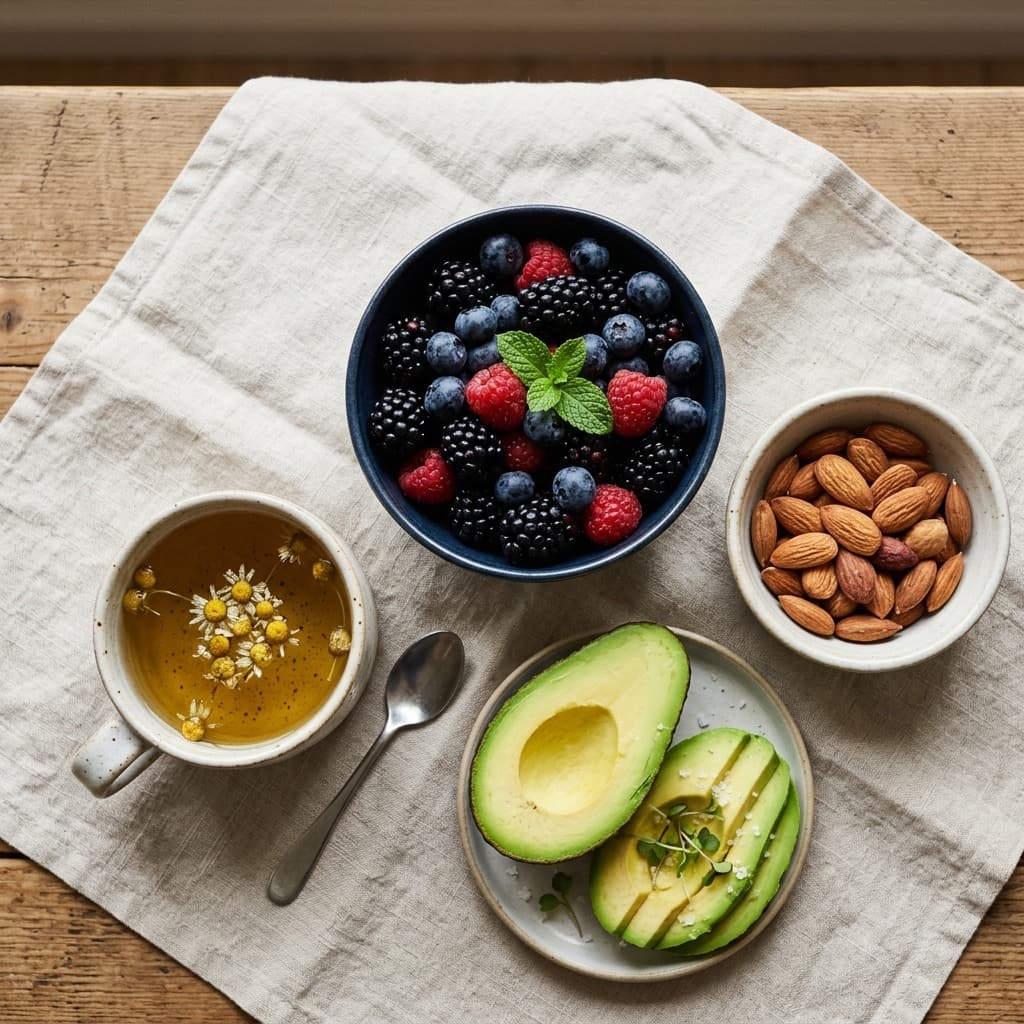
    Magnesium, vitamin E (antioxidant), protein, healthy fats. Perfect anti-stress snack. Daily handful.

  5. 5

    5. Avocado

    Monounsaturated fats (brain), potassium (regulates pressure), B vitamins. Filling and stabilizing.

  6. 6

    6. Eggs

    Tryptophan, choline (neurotransmission), B vitamins, complete protein. The anti-stress breakfast par excellence.

  1. 1

    7. Green Tea

    L-theanine: an amino acid that increases GABA and alpha waves (alert calm). Moderate caffeine for energy without jitters.

  2. 2

    8. Bananas

    Potassium, magnesium, tryptophan, vitamin B6. Perfect as a snack or at breakfast.

  3. 3

    9. Plain Yogurt (or Kefir)

    Probiotics for the gut-brain axis. Studies show certain strains reduce anxiety. Choose without added sugars.

  4. 4

    10. Legumes

    Tryptophan, magnesium, fiber, plant protein. Stable energy and calming nutrients. Lentils, chickpeas, beans.

  5. 5

    11. Blueberries

    Powerful antioxidants (anthocyanins), vitamin C. Protect the brain from oxidative stress. Fresh or frozen.

  6. 6

    12. Chamomile

    The flavonoid apigenin binds to GABA receptors (same mechanism as some anxiolytics). As tea, especially in the evening.

Foods That Worsen Stress

Refined Sugar

Blood sugar roller coasters create physiological stress. The body releases cortisol and adrenaline to manage peaks and crashes. Sugar addiction creates a vicious cycle.

Replacements: Whole fruits, dark chocolate, honey in moderation

Excessive Caffeine

In moderate amounts (1-2 coffees), caffeine can improve alertness. In excess, it increases cortisol, anxiety, and disrupts sleep (which amplifies stress).

Limit: Max 400mg/day (about 4 espressos). Not after 2pm.

Alcohol

Alcohol seems relaxing in the moment (GABA) but creates an anxious rebound effect. It also disrupts sleep and depletes B vitamins.

Reality: Alcohol worsens anxiety in the medium term. Limit or avoid during periods of stress.

Ultra-Processed Foods

Additives, preservatives, hidden sugars, trans fats... All of this disrupts the microbiome and creates inflammation, which increases stress.

Excess Trans and Saturated Fats

Chronic inflammation amplifies the stress response. Fast food and industrial dishes are full of them.

Anti-Stress Meal Plan (Sample Day)

  1. 1

    Upon Waking

    Large glass of water. Green tea or herbal tea (avoid coffee on an empty stomach — cortisol already high in the morning).

  2. 2

    Breakfast

    Scrambled eggs + spinach + avocado + whole grain bread

    Or: Oatmeal + banana + almonds + chia seeds
    
    Or: Smoothie (spinach, banana, almond butter, oat milk)
    
  3. 3

    Snack (if needed)

    Handful of almonds + few squares of dark chocolate

    Or: Plain yogurt + blueberries
    
  4. 4

    Lunch

    Complete salad: quinoa + lentils + greens + avocado + salmon + lemon-olive dressing

    Or: Buddha bowl with proteins and varied vegetables
    
  5. 5

    Afternoon Snack

    Banana + nut butter

    Or: Hummus + crudités
    
  6. 6

    Dinner

    Grilled fish + steamed vegetables + sweet potato

    Or: Chickpea curry + brown rice + spinach
    
    (Light dinner, 2-3h before bed)
    
  7. 7

    Evening

    Chamomile tea (or passionflower, valerian, lemon balm)

Calming Teas and Beverages

The Calming Champions

  • Chamomile: GABA, mild sedative effect
  • Passionflower: Studied natural anxiolytic
  • Valerian: Improves sleep
  • Lemon balm: Calming and digestive
  • Lavender: Soothing, can be drunk as tea

How to Use Them

  • 1-2 cups per day, especially in the evening
  • Let steep 5-10 minutes (cover to keep oils)
  • Avoid if taking anxiolytics (possible interactions)

The Importance of Meal Regularity

Stress is amplified by instability — including blood sugar.

Best practices:

  • 3 meals + 1-2 snacks if needed
  • Don't skip meals (especially breakfast for many)
  • Avoid long fasting periods (>5-6h) during stress
  • Eat at relatively regular times

Why: Blood sugar stability = hormonal stability = better stress management.

FAQ

Do anti-stress supplements work?

Some have evidence: magnesium (if deficient), omega-3s, L-theanine, ashwagandha, rhodiola. But food remains the foundation. Supplements don

Does coffee really worsen anxiety?

It depends on your genetic sensitivity to caffeine and the amount. Some metabolize caffeine poorly and feel more anxiety. Observe your personal response. If coffee makes you nervous, reduce or switch to green tea.

Is chocolate really anti-stress or is it an excuse?

Dark chocolate (70%+) has real properties: magnesium, theobromine, flavonoids. But sugary milk chocolate is rather comfort food without real benefit. Quantity matters too: 1-2 squares, not 200g.

How long to see effects?

Some changes (blood sugar stability) are quick (a few days). Impact on neurotransmitters and microbiome takes 2-4 weeks of consistent dietary change. Be patient and consistent.

Conclusion

Your diet isn't just fuel — it's information for your brain and nervous system. Every meal is an opportunity to support your emotional balance or to weaken it.

Anti-stress foods aren't miracle cures. But integrated into an overall balanced diet, they constitute a solid foundation for better managing daily stress.

Start simply: add one anti-stress food to each meal, reduce one that worsens. Observe the effects over a few weeks. Your body (and mind) will thank you.


Nutrition programs for your balance

Discover our dietary programs designed to support your mental well-being. Anti-stress recipes, balanced meal plans, and personalized advice.

Explore anti-stress programs

Keywords

nutritionstressanxietyfoodcalm

Ready to transform your wellbeing?

Join thousands who have already started their wellness journey with Retreat & Be.

Commencer

Comments (0)

Leave a comment