

Sound Healing & Sound Baths: Benefits, Science, How to Start
Discover sound healing and sound baths: real benefits, the science behind the vibrations, and a simple guide to start your first session with confidence.
Équipe Retreat And Be
Editorial content produced and reviewed by the Retreat And Be team.
Introduction
In a world that rarely stops talking, sound healing offers a rare invitation: to lie still, close your eyes, and let waves of tone wash over your body. Whether produced by crystal singing bowls, gongs, tuning forks, or the human voice, these immersive soundscapes have moved from temple floors and yoga studios into clinics, retreats, and living rooms.
This guide explains what sound healing actually is, what the research says about its effects on stress and the nervous system, and exactly how to experience your first sound bath. No musical talent required, and nothing to "achieve." Just an open ear and a willingness to slow down.
What Is Sound Healing?
Sound healing is the deliberate use of sound and vibration to support relaxation, emotional release, and a felt sense of balance. A sound bath is the most popular format: a group or solo session where you lie down, fully clothed and supported by blankets, while a practitioner plays resonant instruments around the room.
Common Instruments
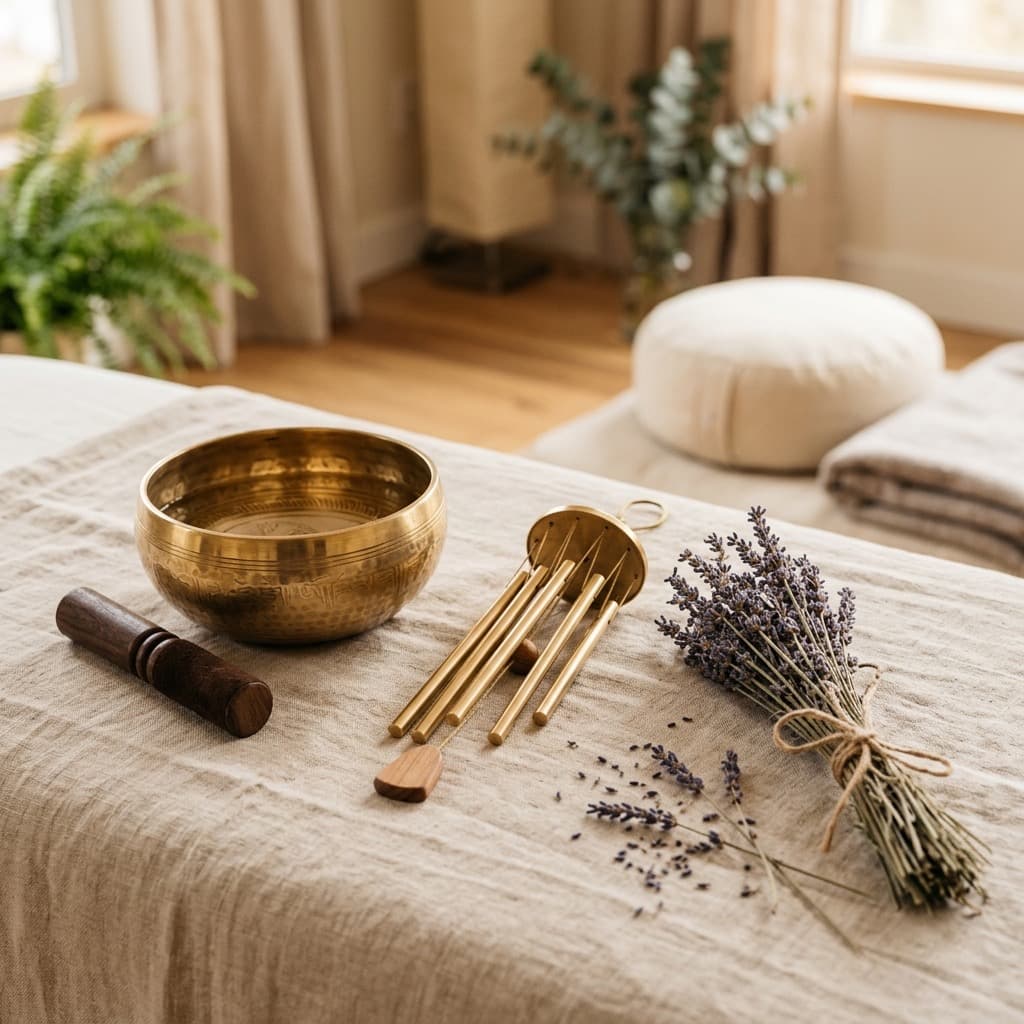
- Crystal singing bowls: bright, sustained tones tuned to specific frequencies
- Tibetan (metal) bowls: warmer, layered overtones with strong physical buzz
- Gongs: vast, ocean-like waves that build and recede
- Tuning forks: precise frequencies often placed near the body
- Voice and chant: toning, mantra, and overtone singing
- Chimes and koshi bells: delicate textures to open or close a session
Unlike a concert, a sound bath has no melody to follow and no performance to judge. The "music" is intentionally non-narrative so your mind has nothing to grip, making it easier to drift into a restful state.
The Science Behind the Vibrations
Sound healing is often described in mystical terms, but several measurable mechanisms help explain why people feel calmer afterward.
The Nervous System Shift
Slow, sustained tones encourage parasympathetic activation, the "rest and digest" branch of your nervous system. As the body perceives safety, heart rate tends to slow, breathing deepens, and muscle tension softens. A frequently cited 2016 study in the Journal of Evidence-Based Integrative Medicine found that participants reported significantly reduced tension, anger, fatigue, and depressed mood after a 60-minute singing-bowl meditation.
Brainwave Entrainment
When you focus on rhythmic, repetitive sound, brain activity can gradually shift toward slower alpha and theta wavelengths, the same states linked to deep relaxation, light meditation, and the moments just before sleep. This is one reason many people drift into a dreamy, semi-conscious state during a session.
Vibration You Can Feel
Sound is physical. Low frequencies from gongs and large bowls create vibrations you sense in your chest, belly, and bones. This tactile quality gives the body something concrete to follow, which can quiet a busy, overthinking mind.
Benefits People Report
While research is still young, both studies and consistent practitioner feedback point to several recurring benefits:
- Lower stress and anxiety: the most commonly reported effect, often within a single session
- Better sleep: many people use evening sound baths to unwind before bed
- Emotional release: tears, sighs, or a sense of lightness are normal and welcome
- Mental clarity: a quieter mind after the "noise" settles
- Pain and tension relief: relaxation can ease tight shoulders, jaws, and backs
- A sense of connection: group sessions create a shared, grounding stillness
Who It Suits
Sound healing is gentle and accessible. It is especially valued by people who find seated, silent meditation difficult, because the sound gives attention a soft place to rest. Busy professionals, caregivers, and anyone navigating burnout often find it an easy entry point to slowing down.
How to Experience Your First Sound Bath
- 1
Choose your setting
Decide between a live group session, a private one-to-one, or a guided recording at home. Beginners often enjoy a live group bath for the immersive, room-filling vibration.
- 2
Prepare your body
Wear loose, warm clothing and avoid heavy meals beforehand. Bring a blanket, an eye mask, and a small cushion so you can lie down comfortably for 45 to 60 minutes.
- 3
Set an intention
Before you begin, name one simple intention, such as "rest" or "release." There is no goal to reach, but a gentle focus helps you let go more fully.
- 4
Let go and listen
Lie on your back, relax your jaw and hands, and breathe naturally. If your mind wanders, return to the sound. Falling asleep is fine and very common.
- 5
Integrate slowly
When the session ends, move gently, drink water, and avoid rushing back to screens. Give yourself a few quiet minutes to absorb how you feel.
Practicing Sound Healing at Home
You do not need expensive equipment to begin. A single quality singing bowl, a pair of tuning forks, or even a well-produced recording can create a meaningful daily ritual.
A Simple Home Routine
- Dim the lights and silence notifications
- Lie down or sit comfortably with a blanket
- Play a 15 to 20 minute sound recording or gently sound your own bowl
- Breathe slowly, letting each tone soften your body
- Rest in silence for two minutes before getting up
Choosing a Quality Practitioner
The experience depends heavily on the facilitator. Look for someone who:
- Explains what to expect and invites you to leave if uncomfortable
- Has recognized training and clear references
- Creates a safe, welcoming, non-judgmental space
- Adjusts volume and intensity to the group
- Never makes exaggerated medical claims
At a dedicated wellness retreat, sound baths are often woven into a wider program of yoga, breathwork, and rest, allowing the calming effects to deepen over several days rather than a single hour.
FAQ
What should I expect during my first sound bath?
You will lie down, fully clothed, while a practitioner plays bowls, gongs, or chimes for around 45 to 60 minutes. Many people feel deeply relaxed, drift toward sleep, or notice tingling and warmth. There is nothing to do but listen.
Is sound healing scientifically proven?
Research is still early but promising. Small studies link singing-bowl meditation to reduced stress, tension, and improved mood, largely through nervous-system relaxation. It is best seen as a supportive practice rather than a medical treatment.
How often should I do a sound bath?
There is no fixed rule. Once a week or even once a month can be beneficial, and a short daily recording at home works well too. Consistency matters more than intensity, so choose a rhythm you can maintain.
Can beginners practice sound healing at home?
Absolutely. A single singing bowl or a guided recording is enough to start. Find a quiet space, lie down, breathe slowly, and let the tones do the work. No musical experience is needed.
Conclusion
Sound healing is one of the simplest doorways into deep rest available today: no technique to master, no posture to hold, just the willingness to lie back and listen. Whether you try a singing bowl at home or immerse yourself in a guided sound bath on retreat, you may be surprised how quickly tension melts when you finally let the vibrations carry you.
Experience Sound Healing on Retreat
Experience sound baths on a Retreat & Be wellness retreat — curated retreats led by vetted facilitators in serene settings.
Explore Wellness RetreatsKeywords
Ready to transform your wellbeing?
Join thousands who have already started their wellness journey with Retreat & Be.
Start