

Meditation for Sleep: Effective Techniques for Better Rest
Transform your sleep with meditation techniques specifically designed for bedtime. Guided practices, tips, and science-backed methods for restful nights.
Équipe Retreat And Be
Editorial content produced and reviewed by the Retreat And Be team.
Introduction
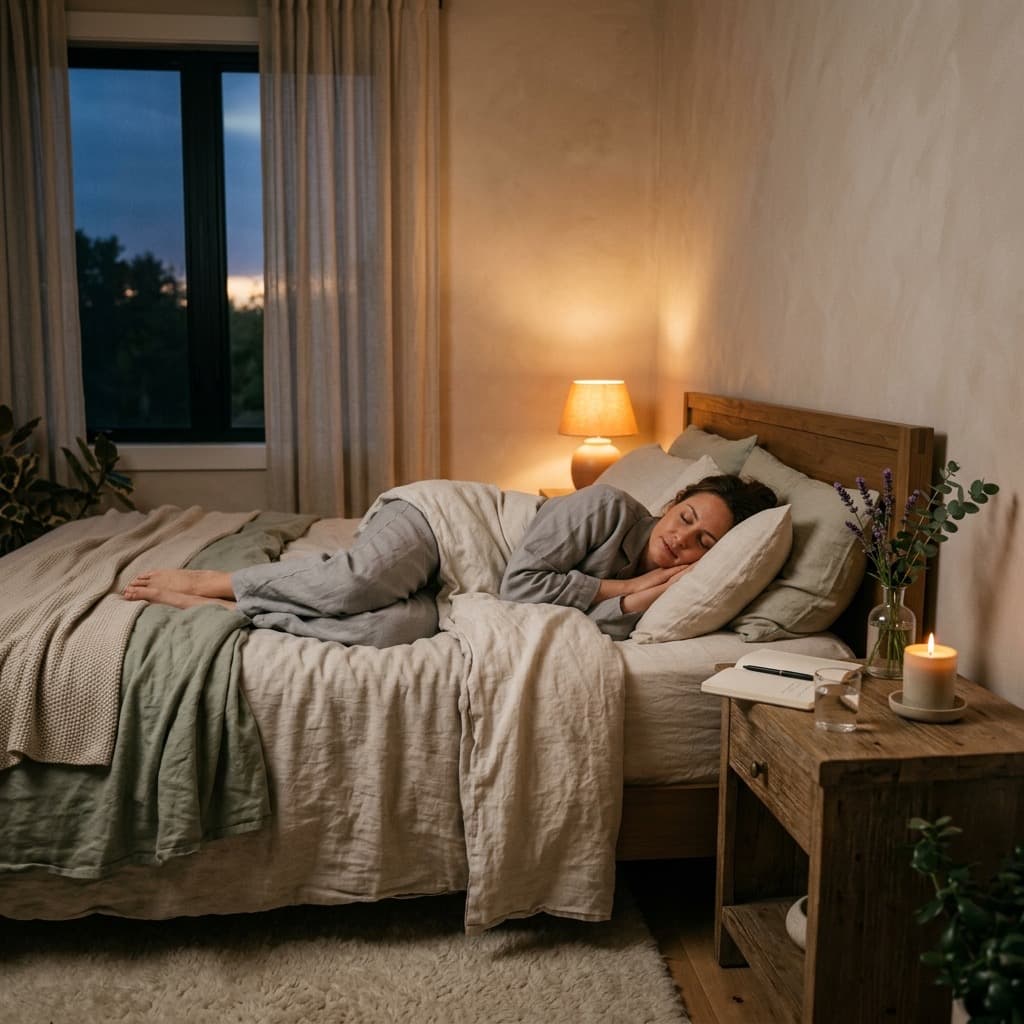
The irony of sleep trouble: the more you try to fall asleep, the harder it becomes. Your mind races. You watch the clock. Tension builds. Sleep retreats further.
Sleep meditation breaks this cycle. Not by forcing sleep but by creating conditions where sleep naturally arises. This guide provides techniques specifically designed to carry you from waking to sleeping with ease.
Why Meditation Works for Sleep
The Science
Sleep meditation addresses root causes of sleep difficulty:
Calms the nervous system: Activates parasympathetic response, reducing cortisol and adrenaline
Reduces rumination: Gives the mind something to do besides worry
Relaxes the body: Progressive relaxation releases physical tension holding sleep at bay
Creates transition ritual: Signals to brain that sleep time is approaching
Research Findings
Studies show meditation for sleep:
- Reduces time to fall asleep by 10-20 minutes
- Decreases nighttime awakening
- Improves sleep quality scores
- Reduces need for sleep medication in some cases
- Works as well as pharmacological intervention for mild-moderate insomnia
Techniques for Falling Asleep
Body Scan Relaxation
The most effective bedtime meditation:
Setup: Lie in bed, covers on, eyes closed, ready for sleep
Practice:
- Take three deep breaths, exhaling completely
- Focus on feet—notice all sensations without changing them
- Allow feet to feel heavy, sinking into mattress
- Move attention to lower legs, same process
- Continue upward: thighs, hips, abdomen, chest, hands, arms, shoulders, neck, face
- Each area: notice, allow heaviness, release
- Full body now heavy and relaxed
- Stay with whole-body awareness until sleep comes
Duration: 15-25 minutes
Why it works: Systematic attention relaxes each body part while occupying the mind with harmless focus.
Counting Down Relaxation
Simple but powerful:
Practice:
- Breathe naturally, eyes closed
- On exhale, think "100"
- On next exhale, think "99"
- Continue counting down
- If you lose count, start at a comfortable number
- Don't try to reach zero—let sleep interrupt
Duration: Until sleep
Why it works: Gives mind boring task, interfering with worry loops without stimulating thought.
4-7-8 Breathing
Dr. Andrew Weil's sleep technique:
Practice:
- Tongue tip behind upper front teeth
- Exhale completely through mouth
- Inhale through nose: 4 counts
- Hold breath: 7 counts
- Exhale through mouth: 8 counts
- Repeat 4 cycles
Duration: 2-3 minutes before other techniques
Why it works: Extended exhale activates vagus nerve, triggering relaxation response.
- 1
Preparation
Begin 30-60 minutes before bed. Dim lights, silence phone, complete any must-do tasks. Create conditions for sleep success.
- 2
Transition
Move to bed when drowsy, not when exhausted. Perform brief bedtime routine if helpful (bathroom, glass of water, etc.).
- 3
Initial Breathing
Start with 4-7-8 breathing or simple deep breaths. 3-5 minutes to shift from active to receptive state.
- 4
Body Relaxation
Body scan or progressive relaxation. 10-20 minutes of systematic body attention.
- 5
Letting Go
Release all effort. If still awake after body scan, use counting or visualization. No forcing—allow sleep to arrive.
Visualization for Sleep
Create mental journey away from waking concerns:
The Descending Path: Imagine walking down a gentle staircase or path, each step taking you deeper into relaxation. Count steps if helpful. At bottom is a peaceful place—garden, beach, forest—where you rest completely.
The Safe Place: Visualize a place you feel completely secure and relaxed. Could be real or imagined. Fill in sensory details: What do you see? Hear? Feel? Let yourself rest there.
Cloud Floating: Imagine lying on a soft cloud, floating slowly across a calm sky. Feel supported completely. Let the cloud carry you into sleep.
Guided Sleep Meditations
When to Use Guided
Guided meditations help when:
- You're new to meditation
- Your mind is especially busy
- You prefer a voice to follow
- Self-directed practice isn't working
Finding Quality Guided Meditations
Apps:
- Calm (excellent sleep-specific content)
- Headspace (sleep sleepcasts)
- Insight Timer (free options)
- Nothing Much Happens (bedtime stories)
Qualities of good sleep guides:
- Slow, calm voice
- Long pauses
- Non-stimulating content
- Purpose-built for sleep (not just relaxation)
Creating Your Own
Record yourself guiding through your favorite technique. Your own voice can be powerfully effective.
Techniques for Night Waking
When You Wake at 3 AM
Different approach needed for middle-of-night awakening:
Don't:
- Check the time (increases anxiety)
- Mentally calculate sleep remaining
- Pick up phone
- Start problem-solving
Do:
- Stay lying down with eyes closed
- Accept wakefulness without frustration
- Begin body scan or counting
- Focus on rest even if not sleep
The 20-Minute Rule
If after ~20 minutes you're fully awake:
- Get out of bed
- Go to another room
- Do something calm (no screens)
- Return to bed when drowsy
- Repeat if needed
This preserves the bed-sleep association.
Building a Sleep Meditation Practice
Consistency Matters
Like all meditation, sleep meditation improves with practice:
- Same technique each night (at first)
- Same time if possible
- Don't evaluate during—just do
- Results accumulate over weeks
Troubleshooting
"I fall asleep during other meditations but not this one" Performance pressure. Remember: the goal is sleep, not staying awake to finish the meditation.
"My mind races even during body scan" Normal at first. Simply return attention to body each time. The practice IS the returning.
"I feel more awake after meditation" May be doing too-stimulating technique. Use slower, simpler practices. Ensure true sleep-oriented (not mindfulness) meditation.
"It worked before but stopped" Common. Try different technique or take a few nights off from structured practice.
Complementary Practices
Evening Routine
Set up sleep success hours before bed:
- Dim lights after sunset
- No screens 1+ hours before bed
- Light evening meal
- Avoid alcohol and caffeine after noon
- Light movement (gentle yoga, stretching)
Bedroom Environment
Optimize sleep setting:
- Cool temperature (65-68°F / 18-20°C)
- Complete darkness
- Quiet or consistent white noise
- Comfortable mattress and pillows
- Reserved for sleep and intimacy only
Daytime Practices
Support nighttime sleep with daytime habits:
- Morning light exposure
- Regular exercise (not too close to bed)
- Stress management practices
- Consistent wake time
- Limited napping
FAQ: Sleep Meditation Questions
What if I fall asleep before the meditation ends?
That's the goal! You're not trying to complete the meditation—you're using it to transition to sleep. Mission accomplished.
Can I use guided meditations every night?
Yes, many people do indefinitely. If you want to build self-guided skills, try one night weekly without guidance and gradually increase.
Should I use headphones or speaker?
Either works. Headphones can help with immersion and not disturbing partners. Some prefer speaker to avoid cord discomfort. Sleep headbands exist for side sleepers.
How is sleep meditation different from NSDR/yoga nidra?
Yoga nidra and NSDR (non-sleep deep rest) maintain awareness at threshold between wake and sleep. Sleep meditation aims to carry you into actual sleep. Different goals, different techniques.
Conclusion: Rest Is a Practice
Good sleep isn't about conquering insomnia through willpower. It's about creating conditions for sleep to emerge naturally—body relaxed, mind quieted, environment supportive.
Sleep meditation trains both the ability to relax and the trust that sleep will come. It transforms the adversarial relationship with sleep into a cooperative one.
Tonight, try one technique. Don't evaluate—just practice. Let the results accumulate over nights and weeks. Your relationship with sleep can transform, one restful night at a time.
Sleep-Focused Retreats
Reset your sleep patterns with our specialized sleep retreats. Optimal environments, expert guidance, and techniques you'll use for life.
Explore Sleep RetreatsKeywords
Ready to transform your wellbeing?
Join thousands who have already started their wellness journey with Retreat & Be.
Start