

Guided Meditation: Benefits, Types, and How to Practice Effectively
Everything you need to know about guided meditation. Explore different styles, discover the science-backed benefits, and find your perfect practice.
Équipe Retreat And Be
Editorial content produced and reviewed by the Retreat And Be team.
Introduction
"Just quiet your mind." As meditation instructions go, it's both common and unhelpful. How do you quiet a mind that seems determined to race?
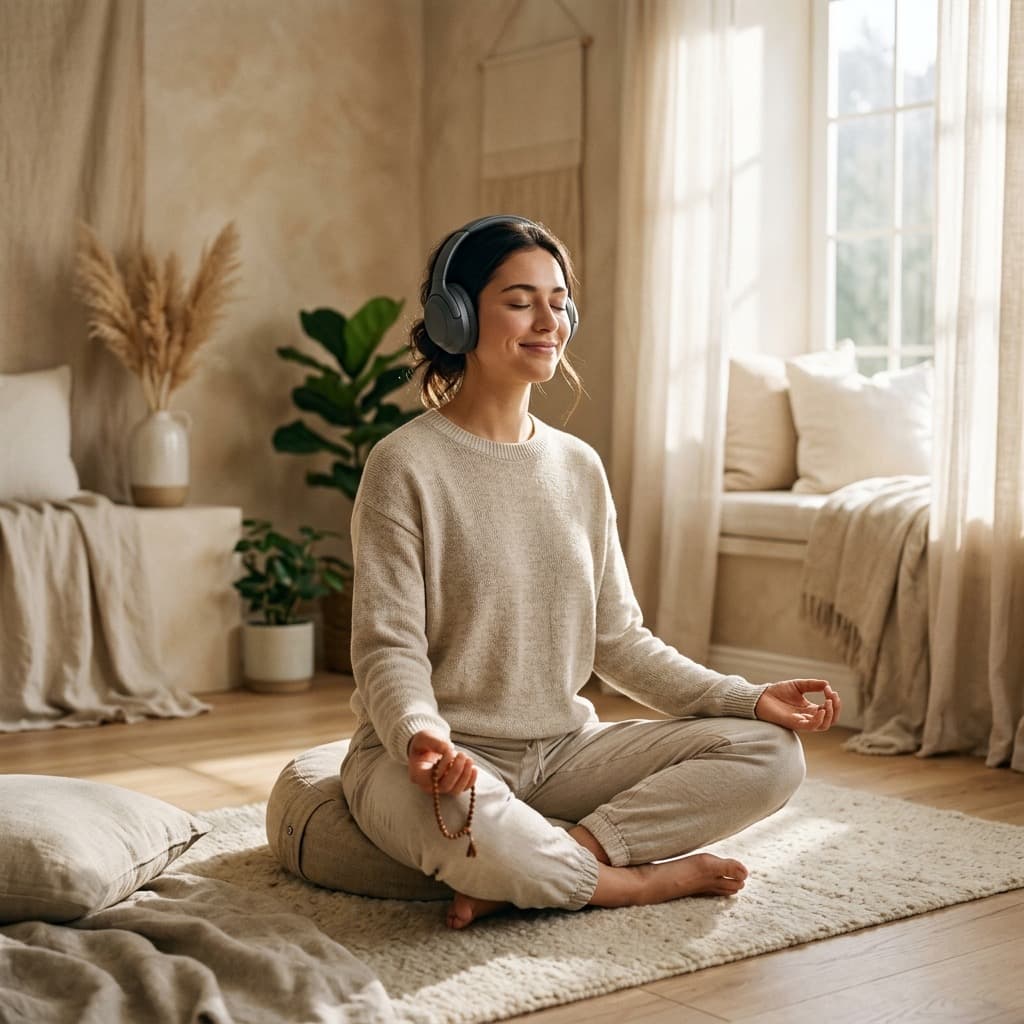
Guided meditation offers a solution. Instead of sitting in silence wondering if you're doing it right, you follow a voice that tells you exactly where to place your attention. It's meditation with training wheels—except many experienced practitioners use guides permanently, and that's perfectly fine.
What Is Guided Meditation?
The Basics
Guided meditation is any meditation where a teacher's voice leads you through the practice. The guide provides:
- Instructions for what to focus on
- Timing for different elements
- Imagery and visualization when appropriate
- Reminders to refocus if wandering
Guided vs. Self-Directed
Guided:
- Follow instructions
- Less wondering "am I doing this right?"
- Wide variety of focuses/styles
- Accessible for beginners
- Can depend on quality of guide
Self-Directed:
- Choose your own focus
- Develops internal navigation
- Requires more experience
- More flexible
- Can feel harder initially
Neither is superior—they serve different purposes and preferences.
Benefits of Guided Meditation
Accessibility
Guided practice removes barriers:
- No prior knowledge needed
- No wondering what to do
- Clear beginning, middle, end
- Built-in timing
- Reduced frustration
Variety
Guides offer diverse experiences:
- Different techniques each session
- Specific focuses (sleep, anxiety, focus)
- Varied lengths
- Progressive skill building
- Exploration without expertise
Effectiveness
Research shows guided meditation:
- Reduces anxiety comparable to unguided
- Improves sleep quality
- Decreases stress markers
- Increases self-compassion
- Enhances emotional regulation
Sustained Practice
Guides help maintain consistency:
- Novelty prevents boredom
- Structure supports habit
- Progress tracking in apps
- Accountability features
Types of Guided Meditation
- 1
Mindfulness Meditation
Focus on present-moment awareness—typically breath, body, or sounds. Guide helps you stay present and return when wandering.
**Good for**: Stress reduction, anxiety, building foundation - 2
Body Scan
Systematic attention through body regions, noticing sensations without changing them. Often used for relaxation or sleep.
**Good for**: Physical tension, sleep, body awareness - 3
Loving-Kindness (Metta)
Cultivating feelings of love and compassion, starting with self and expanding to others. Uses phrases and imagery.
**Good for**: Self-criticism, relationships, emotional wellbeing - 4
Visualization
Creating mental images—peaceful scenes, healing light, successful outcomes. Imagination as focus object.
**Good for**: Relaxation, performance, creative work - 5
Breath-Focused
Using specific breathing patterns (like 4-7-8 or box breathing) with guidance through each phase.
**Good for**: Quick calm, anxiety, sleep preparation - 6
Movement Meditation
Guided attention during gentle movement—walking, stretching, yoga. Combines physical and mental practice.
**Good for**: Those who struggle sitting still, integration
Specific Purpose Guides
Many guides target particular outcomes:
Sleep: Designed to be followed while falling asleep Anxiety: Specific techniques for calming anxious mind Focus: Building concentration for work or study Grief: Processing loss and difficult emotions Performance: Pre-event preparation Pain Management: Techniques for chronic pain
How to Practice Effectively
Setting Up
Create conditions for success:
- Choose timing: When you're alert but not rushed
- Find space: Quiet, comfortable, minimal interruption
- Prepare body: Comfortable position, bathroom visited
- Minimize distraction: Phone silent, others informed
- Choose guide: Have meditation ready to start
During Practice
Do:
- Follow instructions, even if simple
- Return attention when it wanders (this IS the practice)
- Stay with it even when uncomfortable
- Adjust position if necessary
- Complete the full session when possible
Don't:
- Judge the meditation as good or bad
- Try too hard to achieve a state
- Get frustrated with wandering mind
- Give up after one unsuccessful session
- Check the time constantly
After Practice
Immediate: Take a moment before rushing into activity Reflection: Brief note on what worked/didn't Tracking: Log practice for motivation
Finding Quality Guides
What Makes a Good Guide?
Voice qualities:
- Calm but not sleep-inducing (unless for sleep)
- Clear without being harsh
- Genuine, not performative
- Pace that allows following
Content qualities:
- Clear instructions
- Appropriate pauses
- Not too much talking
- Avoids jargon
- Inclusive language
Popular Platforms
Apps:
- Headspace: Friendly, great for beginners, variety of focuses
- Calm: Beautiful, sleep-focused, celebrity voices
- Insight Timer: Huge free library, community features
- Ten Percent Happier: Practical, skeptic-friendly approach
- Waking Up: Philosophical depth, Sam Harris
YouTube: Free, vast options, variable quality Podcast: Meditation-focused shows (Tara Brach, etc.) Streaming: Spotify, Apple Music have meditation sections
Evaluating New Guides
Try this evaluation process:
- Listen to preview/sample
- Try one full session
- Note how you felt during and after
- Try same guide 3-5 times before judging
- Build collection of favorites
Building a Practice
For Complete Beginners
Week 1-2:
- Same guide, same time daily
- 5-10 minutes
- Simple focus (breath awareness)
Week 3-4:
- Try 2-3 different guides
- Extend to 10-15 minutes
- Notice preferences developing
Month 2+:
- Regular practice established
- Explore different types
- Occasional longer sessions
- Consider unguided sometimes
Maintaining Long-Term
Variety prevents staleness:
- Rotate through favorite guides
- Try new techniques periodically
- Match meditation type to need (anxious day = anxiety guide)
- Build collection that covers different situations
- Mix guided and unguided (eventually)
Common Challenges
"I can't quiet my mind"
Reality check: No one can—thoughts arise automatically Solution: Notice thinking, return to guide's instructions. This returning IS the practice.
"The guide's voice annoys me"
Reality check: Guide-student fit matters Solution: Try many guides. Your perfect guide exists.
"I fall asleep"
Reality check: Common, especially when tired Solution: Sit upright, earlier in day, eyes slightly open, shorter sessions
"I don't notice any benefits"
Reality check: Benefits often subtle and cumulative Solution: Track mood before/after practice. Give it 4-8 weeks of consistent practice before evaluating.
"I don't have time"
Reality check: You have 5 minutes Solution: Start with 5-minute guides. Some meditation beats none.
Advanced Options
Eventually Trying Unguided
When you might experiment:
- After establishing guided practice
- When you notice preferences for certain techniques
- When you want more flexibility
- When silence becomes appealing
Hybrid Approach
Many experienced meditators use both:
- Guided when exploring new techniques
- Unguided for familiar practices
- Guided when motivation is low
- Unguided for longer sits
Retreats and Intensive Practice
For deeper experience:
- Day-long guided retreat
- Multi-day meditation retreat
- Silent retreat with periodic guidance
- Working with personal teacher
FAQ: Guided Meditation Questions
Is guided meditation 'real' meditation?
Absolutely. The core practice—directing attention and returning when it wanders—is identical. Guidance is simply a method of instruction, not a lesser form.
Should I eventually stop using guides?
Not necessarily. Many experienced meditators use guides permanently. Others prefer unguided. Neither is superior—use what serves your practice.
Can I learn to meditate only through guides?
Yes. While unguided practice develops certain skills, you can have a complete, effective meditation practice using only guided sessions.
How do I know if it's working?
Benefits often show in daily life more than during meditation: less reactive, more present, sleeping better, handling stress differently. Give it several weeks of consistent practice.
Conclusion: Your Guide Awaits
Guided meditation offers a doorway into practice that requires nothing but showing up and listening. The guide does the thinking about what to do—your job is simply to follow along.
Start today. Choose any guide that seems appealing. Five minutes. See what happens. The practice will teach you what you need to know.
Your perfect guide is out there, ready to walk alongside your meditation journey. All you need to do is press play and begin.
Guided Practice at Retreats
Experience guided meditation in transformative retreat settings. Expert teachers, beautiful environments, and the space to go deep.
Explore Meditation RetreatsKeywords
Ready to transform your wellbeing?
Join thousands who have already started their wellness journey with Retreat & Be.
Start