

Cardiac Coherence: Complete Practical Guide to This Powerful Technique
Master cardiac coherence with our step-by-step guide. Learn the 365 method and discover the science-backed benefits for stress, focus, and overall health.
Équipe Retreat And Be
Editorial content produced and reviewed by the Retreat And Be team.
Introduction
What if you could reset your nervous system in just 5 minutes? What if a simple breathing technique could improve your heart health, reduce stress, sharpen your focus, and boost your immune system?
This isn't wishful thinking: it's cardiac coherence, a structured breathing technique designed to support steadier heart-rhythm awareness and nervous-system regulation.
What Is Cardiac Coherence?
The Science Behind It
Your heart doesn't beat like a metronome—it varies slightly with each beat. This variation, called Heart Rate Variability (HRV), reflects your nervous system's flexibility and health.
When you're stressed, your HRV becomes chaotic. When you practice cardiac coherence, your HRV creates a smooth, wave-like pattern. This coherent state triggers a cascade of physiological benefits.
The Heart-Brain Connection
Your heart sends more signals to your brain than your brain sends to your heart. These signals directly influence:
- Emotional processing (amygdala)
- Decision-making (prefrontal cortex)
- Memory (hippocampus)
- Stress response (hypothalamus)
When your heart rhythm is coherent, these brain regions function optimally.
The 365 Method Explained
The most popular cardiac coherence protocol is the 365 method:
- 3 times per day
- 6 breaths per minute
- 5 minutes each session
Why These Numbers?
- 1
3 Times Per Day
Morning: Sets your baseline for the day Midday: Resets after morning stress Evening: Prepares your body for rest Spacing sessions allows you to maintain coherence benefits throughout the day.
- 2
6 Breaths Per Minute
This rhythm (5 seconds in, 5 seconds out) naturally resonates with your cardiovascular system. It's the "sweet spot" where heart and breath synchronize most effectively for most adults.
- 3
5 Minutes Each Session
This duration is enough to shift your nervous system state and maintain benefits for 4-6 hours. Shorter sessions work too, but 5 minutes provides optimal results.
How to Practice: Step by Step
Preparation
- Find a quiet, comfortable place
- Sit or stand (lying down works too)
- Keep your spine straight but relaxed
- Close your eyes or soften your gaze
The Technique
-
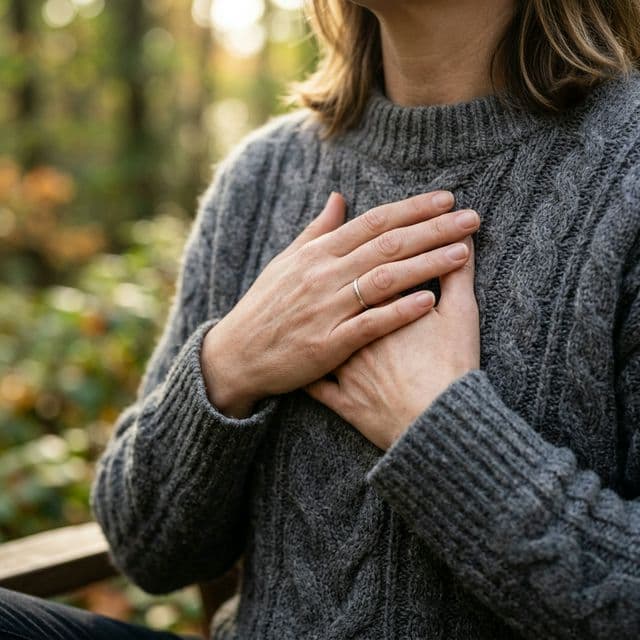
Focus on your heart area Place your attention (or even your hand) on your heart. This physical focus helps establish the connection.
-
Begin breathing rhythmically
- Inhale slowly for 5 seconds
- Exhale slowly for 5 seconds
- No pause between breaths
- Breathe through your nose if comfortable
-
Maintain the rhythm Continue this 6-breaths-per-minute pattern for 5 minutes. That's 30 breath cycles total.
-
Add positive emotion (advanced) Once comfortable with the breathing, recall a positive feeling: gratitude, appreciation, love, or a happy memory. This amplifies coherence.
Timing Tips
- Use a timer or app (many free options available)
- Some apps provide visual or audio guides
- With practice, you'll internalize the rhythm
Benefits: What Science Shows
Immediate Effects (Within Minutes)
- Lower heart rate
- Reduced blood pressure
- Decreased cortisol
- Increased mental clarity
- Feeling of calm alertness
Short-Term Benefits (Days to Weeks)
- Better stress management
- Improved sleep quality
- Enhanced focus and concentration
- More emotional stability
- Reduced anxiety
Long-Term Benefits (Months of Practice)
- Increased HRV (sign of cardiovascular health)
- Strengthened immune function
- Better emotional regulation
- Lower baseline stress levels
- Improved cognitive function
Advanced Techniques
Coherent Breathing Variations
Once you master the basic technique, try these:
4-6 Breathing
- 4 seconds inhale, 6 seconds exhale
- Enhanced parasympathetic activation
- Better for evening/relaxation
5-5-5 Triangle
- 5 seconds inhale
- 5 seconds hold
- 5 seconds exhale
- Deeper state, better for experienced practitioners
Quick Coherence (Emergency Use)
- 1 minute of 6-breaths-per-minute
- Heart focus + positive emotion
- Use before stressful events
Integrating Visualization
Enhance your practice by visualizing:
- Breath flowing in and out through your heart
- Light radiating from your heart with each exhale
- Your body relaxing deeper with each breath
- A peaceful scene that brings you joy
When to Practice
Optimal Times
Morning (Soon After Waking)
- Sets positive tone for the day
- Before checking phone/email
- Helps maintain calm baseline
Before Meals
- Activates parasympathetic "rest and digest"
- Improves digestion
- Creates mindful transition
Before Stressful Events
- Meetings, presentations, difficult conversations
- 1-minute quick coherence works well
- Prevents stress escalation
Before Bed
- Prepares nervous system for sleep
- Clears day's accumulated tension
- Improves sleep quality
Situations Where It Helps
- After receiving stressful news
- When you notice anxiety rising
- During work breaks
- While waiting (appointments, commuting)
- After conflict or difficult interactions
Common Mistakes and Solutions
Mistake 1: Forcing the Breath
Problem: Breathing too deeply or straining Solution: Keep breaths gentle and natural. You're not trying to fill your lungs completely—just breathe smoothly.
Mistake 2: Counting Obsessively
Problem: Getting anxious about exact timing Solution: Use an app or guide. Once familiar, approximate timing is fine. The rhythm matters more than precision.
Mistake 3: Expecting Instant Miracles
Problem: Giving up after a few tries Solution: Benefits accumulate with consistent practice. Give it 2-3 weeks before judging effectiveness.
Mistake 4: Only Practicing When Stressed
Problem: Using it as emergency tool only Solution: Regular practice builds resilience. It's more effective as prevention than cure.
Cardiac Coherence vs. Other Techniques
Compared to Meditation
- Faster results: Coherence works within minutes
- More structured: Specific breathing rhythm
- Easier to learn: Less mental discipline required
- Complementary: Can be gateway to deeper meditation
Compared to Deep Breathing
- More precise: Specific timing optimized for physiology
- Heart-focused: Engages heart-brain connection
- Measurable: HRV changes can be tracked
- More researched: Strong scientific foundation
Tools and Apps
Free Options
- Insight Timer (breathing timers)
- YouTube guided sessions
- Simple smartphone timer
Dedicated Apps
- HeartMath Inner Balance (with sensor)
- Breathing App
- Kardia (heart rhythm tracking)
Biofeedback Devices
For those wanting to track their coherence:
- HeartMath sensors
- Apple Watch (limited HRV)
- Oura Ring
- Garmin watches
FAQ: Common Questions
Can I practice cardiac coherence while doing other things?
For beginners, dedicated focus is best. With experience, you can practice while walking, waiting, or during low-demand activities. Avoid practicing while driving or doing anything requiring full attention.
What if 5 seconds feels too long or short?
Find your personal resonant frequency. For some, 4-second cycles work better; for others, 6-second cycles. The key is smooth, consistent rhythm. Experiment to find what feels natural.
Is it normal to feel light-headed?
Mild lightheadedness when starting is common and usually passes. Ensure you're breathing gently, not hyperventilating. If it persists, shorten your sessions and build up gradually.
How long until I feel the benefits?
Immediate calm is common from the first session. For sustained benefits like better stress management and improved HRV, practice consistently for 2-4 weeks.
Conclusion: A Simple Tool, Profound Effects
Cardiac coherence is remarkable in its simplicity. No equipment needed. No special skills required. Just 5 minutes, 3 times a day, breathing at a specific rhythm.
Yet this simple practice creates measurable changes in your physiology. It builds a bridge between your conscious intentions and your autonomic nervous system. It gives you a tool to regulate your own stress response.
In a world that often feels chaotic and overwhelming, cardiac coherence offers something precious: a reliable way to return to calm, available anytime, anywhere.
The only requirement is that you actually do it. Knowing about cardiac coherence doesn't help—practicing it does. Start today. Five minutes. Six breaths. See what happens.
Deepen Your Practice
Learn cardiac coherence and other breathwork techniques in a supportive retreat environment. Expert guidance, beautiful settings, lasting transformation.
Explore Breathwork RetreatsKeywords
Ready to transform your wellbeing?
Join thousands who have already started their wellness journey with Retreat & Be.
Start