

Yoga for Beginners: Your First Essential Poses
Start your yoga journey with these foundational poses. Step-by-step instructions, modifications, and tips for absolute beginners.
Équipe Retreat And Be
Editorial content produced and reviewed by the Retreat And Be team.
Introduction
Starting yoga can feel intimidating. Complicated-looking poses, Sanskrit names, flexible bodies everywhere—it's easy to think you're not "yoga material." But here's the truth: yoga is for every body, including yours.
This guide introduces the essential poses every beginner should know. No flexibility required. No experience necessary. Just willingness to begin.
Before You Start
What You Need
- Comfortable, stretchy clothing
- Yoga mat (or non-slip surface)
- Open mind
What You Don't Need
- Flexibility (yoga creates it)
- Special equipment
- Perfect body
- Prior experience
The 10 Essential Beginner Poses
1. Mountain Pose (Tadasana)
The foundation of all standing poses
How:
- Stand feet hip-width apart
- Distribute weight evenly through feet
- Engage thighs slightly
- Lengthen spine, crown reaching up
- Shoulders back and down
- Arms by sides, palms forward or facing thighs
- Breathe steadily
Benefits: Improves posture, body awareness, grounding
Modification: Stand against a wall for alignment feedback
2. Child's Pose (Balasana)
Your rest position—return here anytime
How:
- Kneel on floor
- Touch big toes together, knees apart
- Sit back toward heels
- Extend arms forward, forehead to floor
- Relax completely
Benefits: Gentle hip and back stretch, calming, restorative
Modification: Place pillow under forehead or between heels and seat
3. Cat-Cow (Marjaryasana-Bitilasana)
Spinal warm-up essential
How:
- Start on hands and knees (tabletop)
- Inhale: Drop belly, lift gaze (Cow)
- Exhale: Round spine, tuck chin (Cat)
- Flow between for 5-10 breaths
Benefits: Spinal mobility, releases back tension
Modification: Keep movements small if stiff
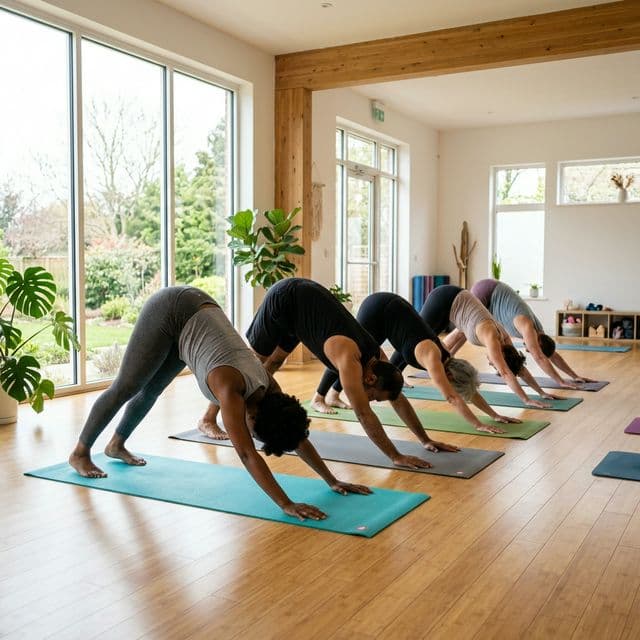
4. Downward-Facing Dog (Adho Mukha Svanasana)
The most recognized yoga pose
How:
- From hands and knees, tuck toes
- Lift hips up and back
- Form inverted V shape
- Press hands firmly, spread fingers
- Relax head between arms
- Pedal feet to warm up hamstrings
Benefits: Full body stretch, builds strength, energizing
Modification: Bend knees generously; focus on lengthening spine
5. Warrior I (Virabhadrasana I)
Build strength and confidence
How:
- From standing, step one foot back 3-4 feet
- Front knee bends over ankle (not past)
- Back foot at 45-degree angle
- Hips face forward
- Arms reach overhead
- Gaze forward or slightly up
Benefits: Strengthens legs, opens hips, builds stamina
Modification: Shorter stance, hands on hips
6. Warrior II (Virabhadrasana II)
Open and powerful
How:
- Wide stance, front foot forward
- Back foot parallel to back edge of mat
- Front knee bends over ankle
- Arms extend parallel to floor
- Gaze over front fingertips
- Hips and shoulders open to side
Benefits: Leg strength, hip opening, focus
Modification: Straighten front leg slightly if knee fatigues
7. Triangle Pose (Trikonasana)
Stretch and strengthen simultaneously
How:
- Wide stance, front foot forward
- Straighten both legs
- Reach forward, then hinge at hip
- Lower front hand to shin, ankle, or floor
- Top arm reaches up
- Gaze up, forward, or down (neck comfort)
Benefits: Side body stretch, leg strength, balance
Modification: Hand on block instead of floor
8. Tree Pose (Vrksasana)
Your first balance pose
How:
- Stand on one leg
- Place other foot on inner calf or thigh (not knee!)
- Hands at heart or overhead
- Find focal point for balance
- Breathe steadily
Benefits: Balance, focus, leg strength, hip opening
Modification: Toe on floor for balance support; hand on wall
9. Seated Forward Fold (Paschimottanasana)
Hamstring and back stretch
How:
- Sit with legs extended
- Flex feet (toes toward you)
- Inhale, lengthen spine
- Exhale, fold forward from hips
- Hold shins, ankles, or feet
- Keep spine long rather than rounded
Benefits: Hamstring flexibility, calms nervous system
Modification: Bend knees as much as needed; use strap around feet
10. Corpse Pose (Savasana)
The most important pose—never skip
How:
- Lie flat on back
- Legs extended, feet fall open
- Arms by sides, palms up
- Close eyes
- Release all effort
- Breathe naturally
- Stay 5-10 minutes
Benefits: Integration, deep relaxation, stress reduction
Modification: Pillow under knees if lower back uncomfortable
Building Your Practice
Sample 15-Minute Flow
- Mountain Pose (5 breaths)
- Cat-Cow (10 rounds)
- Downward Dog (5 breaths)
- Warrior I (right, 5 breaths)
- Warrior II (right, 5 breaths)
- Repeat Warrior I & II (left)
- Triangle (each side, 5 breaths)
- Tree Pose (each side, 5 breaths)
- Seated Forward Fold (10 breaths)
- Savasana (5 minutes)
Progression Tips
- Master these poses before adding more
- Focus on alignment, not depth
- Practice 3-5 times weekly for noticeable progress
- Consider beginner classes for feedback
FAQ: Beginner Questions
I'm not flexible. Can I still do yoga?
Absolutely! Yoga builds flexibility—it doesn't require it. Everyone starts somewhere. Use modifications freely and watch yourself transform over weeks and months.
How often should I practice?
Even 10 minutes daily beats one long session weekly. Consistency matters most. Start with 2-3 times per week and build from there.
Should I take a class or practice at home?
Both work. Classes provide feedback on alignment; home practice builds independence. Many beginners benefit from starting with a few classes, then practicing at home with that foundation.
What if I feel silly or self-conscious?
Everyone does at first. In classes, remember: others are focused on their own practice, not watching you. At home, you have complete privacy to explore without judgment.
Conclusion: Your Journey Begins
These ten poses are your foundation. Master them, and you'll have the tools to explore any yoga style, any class, any practice.
Remember: yoga isn't about touching your toes—it's about what you learn on the way down. Your body, your breath, your practice. Begin today.
Deepen Your Practice at a Retreat
Ready for immersive learning? Our beginner-friendly retreats provide expert guidance, beautiful settings, and the time to truly explore yoga.
Find Beginner RetreatsKeywords
Ready to transform your wellbeing?
Join thousands who have already started their wellness journey with Retreat & Be.
Start